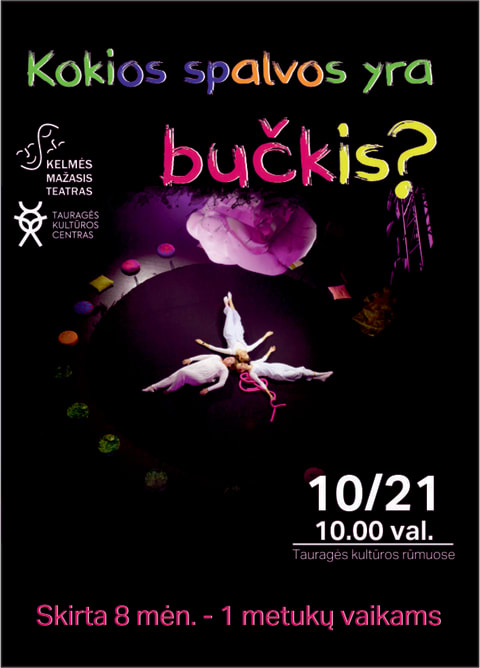
Spektaklis vaikams „Kokios spalvos yra bučkis?“
Buy tickets

Spektaklis yra paremtas R. Bonilla knygos „Kokios spalvos yra bučkis?“ idėja ir kviečia mažuosius kartu su trimis veikėjais tyrinėti spalvų pasaulį. Per žaismingus vizualinius elementus, muziką, šokį ir interaktyvius momentus spektaklis padeda vaikams susipažinti su spalvomis, emocijomis ir jų sąsajomis.
Pagrindinė veikėja yra smalsi mergaitė, kuri labai mėgsta svajoti žiūrėdama į debesis. Vieną dieną ji ima galvoti: „O kokios spalvos yra bučkis?“ Keliaudama per spalvų pasaulį klausia draugių ir vaikų dalyvaujančių spektaklyje – kokios spalvos, jų nuomone, gali būti bučkis. Kiekviena spalva atveria naują emociją ir nuotaiką, kol galiausiai mergaitė supranta, kad bučkis gali būti visų spalvų mišinys, nes jis apima daugybę skirtingų jausmų ir pojūčių.
Spektaklio elementai:
Interaktyvūs spalvų pasauliai:
Kiekviena spalva yra atskiras segmentas su ryškiais scenografiniais elementais (pvz., raudoni siūlai, geltonos saulės dekoracijos, žuvytės, jūra ir t.t.). Vaikai gali liesti tam tikras detales ir dalyvauti kartu žaidimuose. Pirmieji penkeri gyvenimo metai – svarbiausias ir jautriausias laikotarpis, per kurį intensyviausiai formuojasi už kalbą atsakingos neuroninės jungtys. Prigimtinis smalsumas ragina vaiką pačiupinėti viską, kas pasitaiko jo kelyje, ir tuo metu iš pirštų galiukų nerviniai impulsai keliauja į galvos smegenis gabendami daugybę nervinių signalų – jų įvairovė labai svarbi kalbos motorinio centro formavimuisi.
Muzika ir garsai:
Kiekviena spalva turi savo muzikinę temą: raudonąją spalvą lydi energingi ritmai, mėlynąją – ramūs, vandens garsai, o žaliąją – miško garsai. Muzika sukurta taip, kad skatintų vaikų emocinę reakciją. Muzika aktyviai veikia žmogų, plačiai žinomas jos terapinis poveikis: vienokia muzika ramina, kitokia — aktyvina. Muzika yra ne tik malonus užsiėmimas, bet ir labai naudinga vaikų vystymuisi nuo pat ankstyvo amžiaus.
Judėjimas ir šokis:
Aktoriai judesiais ir šokiais įtraukia vaikus į veiksmą.
Pavyzdžiui, visi drauge juda, pagal aktorių pasiūlytus judesius. Muzika skatina smegenų jungčių formavimąsi, ypač srityse, atsakingose už kalbą, atmintį ir problemų sprendimą.
Kalba ir emocijos:
Dialogai paprasti, trumpi, lengvai suprantami, tačiau perteikiantys emocijas ir skatinantys vaikų empatiją. Spektaklyje akcentuojama jausmų įvairovė ir jų priėmimas.
Šviesų ir spalvų žaismas:
Naudojami specialūs apšvietimo efektai, kurie keičia scenos spalvas, sukurdami įtraukiantį ir paslaptingą pasaulį mažiesiems žiūrovams. Jausti spalvas – reiškia gebėti akimis skirti ne tik pagrindines geltoną, mėlyną, raudoną, bet ir per du šimtus jų atspalvių. Tačiau matyti spalvingą pasaulį dar nereiškia jį pažinti. Spalvų pavadinimams reikia laiko. Juos vaikai išmoksta nuo dviejų iki penkerių metų.
Spektaklio metu spalvos siejamos su daiktais, taip vaikai greičiau geba įsiminti.
Pagrindinė žinutė:
Bučkis gali būti visų spalvų, nes jame telpa meilė, šiluma, džiaugsmas ir visi kiti jausmai. Per spalvas ir žaidimus spektaklis moko vaikus pažinti savo emocijas ir dalintis jomis su kitais.
Spektaklis skirtas ne tik vaikams, bet ir tėvams – tai kvietimas kartu atrasti džiaugsmą paprastuose dalykuose!
Tikslas:
Per spektaklyje naudojamas priemones, žaismingai lavinama vaikų sensorinė ir kognityvinė raida, skatinamas kūrybiškumas.
Amžiaus cenzas: nuo 8 mėnesių iki 1 metų vaikai ir jų tėvai
Spektaklio trukmė: 35‒40 min.
On the AllEvents portal you can always Buy tickets to an event Spektaklis vaikams „Kokios spalvos yra bučkis?“, Tauragė, Tauragės kultūros centras October 21
* The description translation is done automatically. There may be inaccuracies. Be sure to check the event description on the ticket store website when buying tickets.
To a concert together? We'll find travel companions quickly!
Can't go to the event? Sell your ticket and save money!
Event organizer
Tauragės kultūros centras, Juridinis asmuo
Dariaus ir Girėno g. 3, Tauragė, Lietuva
Events and tickets Tauragė, All venues
ticketmarket
FK TAURAS sezono abonementas 2026 m.
bilietai
LIUKABU | Kosminė dėlionė | Tauragė
bilietai
Grupė 2 - Karolis ir Donatas su gyvo garso grupe | Tauragė
bilietai
Muzikinis spektaklis "Laisvi drugeliai" | Tauragė
bilietai
Raganiukės teatro premjera "Pelenė"! | Tauragė
kakava
PREMJERA: Atsargiai, Magija!
bilietai
Tauragės krašto muziejus
kakava
Anton Lavrentjev „Nuo 9 iki 99“. Magijos ir humoro šou
kakava
PREMJERA „ATIDUODU ŽMONĄ“
bilietai
TAUTOS BALSAS: Justino Marcinkevičiaus žodis ir daina | TAURAGĖ
Most popular events All Lithuania
bilietai
Biplan - Lukiškių kalėjimas 2.0
kakava
PVŠ ROAST OF ARŪNAS VALINSKAS
kakava
Pažaislio liepų alėjos vakarai | Adomas Vyšniauskas ir gyvo garso grupė
kakava
André Rieu
paysera
OG Version | Kauno Jachtklubas
kakava
Pažaislio liepų alėjos vakarai | Giedrė ir Andrej Polevikov (fortepijonas)
kakava
Pažaislio liepų alėjos vakarai | Monika Liu ir Dmitrijus Golovanovas
kakava
Monika Liu – Kaunas
bilietai
JUODAS VILNIUS 2026
kakava
Kostas Smoriginas ir Cello Club – ANTIQ
 AllEvents.lt
info@allevents.lt
© 2023 - 2026, All rights reserved
AllEvents.lt
info@allevents.lt
© 2023 - 2026, All rights reserved